
Effect of temperature on the properties of encapsulated garlic (Allium sativum)
Article Sidebar
Main Article Content
Abstract
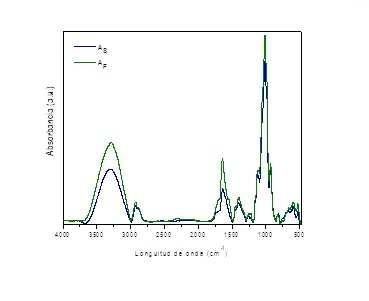
Garlic (Allium sativum) has bioactive compounds that have a beneficial impact on health, highlighting its antioxidant properties; however, these compounds are thermo and photosensitive, which limits their application in food development. The objective of this research was to determine the protection offered by encapsulation by means of double emulsions on the antioxidant compounds present in garlic against the temperature used for drying and processing. The results of FTIR, in fresh garlic (AF) and dry (AS), vibrations between 2849 and 2910 cm-1, corresponding to the symmetric and asymmetric stretching of the C-H bond; 640 and 1629 cm-1, to the stretch of - COOH; 1417 cm-1 to CH flexion and 1181-914 cm-1 to CH deformations, and skeletal stretching of C-O and C-C. The X-ray results showed that the AS presented higher crystallinity, and once the AF showed an amorphous structure, due to a higher water content. The heat treatment used (40° C) did not affect the antioxidant properties, however, the results obtained by FTIR and X-rays indicate that the use of temperature for dehydration is generating variations in the structure of garlic.
Article Details
References
Bender B., D., & Barenas P., M. (2013). El ajo y sus aplicaciones en la conservación de alimentos. Temas selectos de Ingeniería de Alimentos.
Espino-Manzano, S. O., León-López, A., Aguirre-Álvarez, G., González-Lemus, U., Prince, L., & Campos-Montiel, R. G. (2020). Application of Nanoemulsions (W/O) of Extract of Opuntia oligacantha CF Först and Orange Oil in Gelatine Films. Molecules, 25(15), 3487.
Estrada-Fernández, A.G., Dorantes-Bautista, G., Román-Guerrero, A., Hernández-Uribe, J.P., Jiménez, R. (2020). Modification of Oxalis tuberosa starch with OSA, characterization and application in food-grade Pickering emulsion. Journal of Food Science and Technology, https://doi.org/10.1007/s13197-020-04790-y.
Estrada-Fernández, A.G., Román-Guerrero, A., Jiménez-Alvarado, R., Lobato-Calleros, C., Alvarez-Ramirez, J., Vernon-Carter, E.J. (2017). Stabilization of oil-in-water-in-oil (O1/W/O2) Pickering double emulsions by soluble and insoluble whey protein concentrate-gum Arabic complexes used as inner and outer interfaces. Journal of Food Engineering, doi: 10.1016/j.jfoodeng.2017.10.006
Jang, H. J., Lee, H. J., Yoon, D. K., Ji, D. S., Kim, J. H., & Lee, C. H. (2018). Antioxidant and antimicrobial activities of fresh garlic and aged garlic byproducts extracted with different solvents. Food Science and Biotechnology.
León-López, A., Pérez-Marroquín, X. A., Campos-Lozada, G., Campos-Montiel, R. G., & Aguirre-Álvarez, G. (2020). Characterization of whey-based fermented beverages supplemented with hydrolyzed collagen: Antioxidant activity and bioavailability. Foods, 9(8), 1106.
Ramírez-Concepción, H. R., Castro-Velasco, L. N., & Martínez-Santiago, E. (2016). Efectos terapéuticos del ajo (Allium sativum). Revista Salud y Administración, 3(8), 39-47.
Tomišk Alena, Ljubiša Šarić, Serena Bertoni, Michele Protti, Beatrice Albertini, Laura Mercolini, Nadia Passerini (2018). Encapsulations of wild garlic (Allium ursinum L.) extract using spray congealing technology. Food Research International. doi:10.1016/j.foodres.2018.10.081.
Torija, M. E., Matallana, C., & Chalup, N. (2013). El ajo y la cebolla: de las medicinas antiguas al interés actual. Boletín de la Real Sociedad Española de Historia Natural Sección Biología.
Victoria-León, T., Totosaus, A., Guerrero, I., & Pérez-Chabela, M. L. (2006). Efecto de bacterias ácido lácticas termoresistentes en salchichas cocidas. CYTA-Journal of Food, 5(2), 135-141.