
Development of a tool for identifying and preserving knowledge about medicinal plants in the Apan region Hidalgo, utilizing Industry 4.0 technologies
Article Sidebar
Main Article Content
Abstract
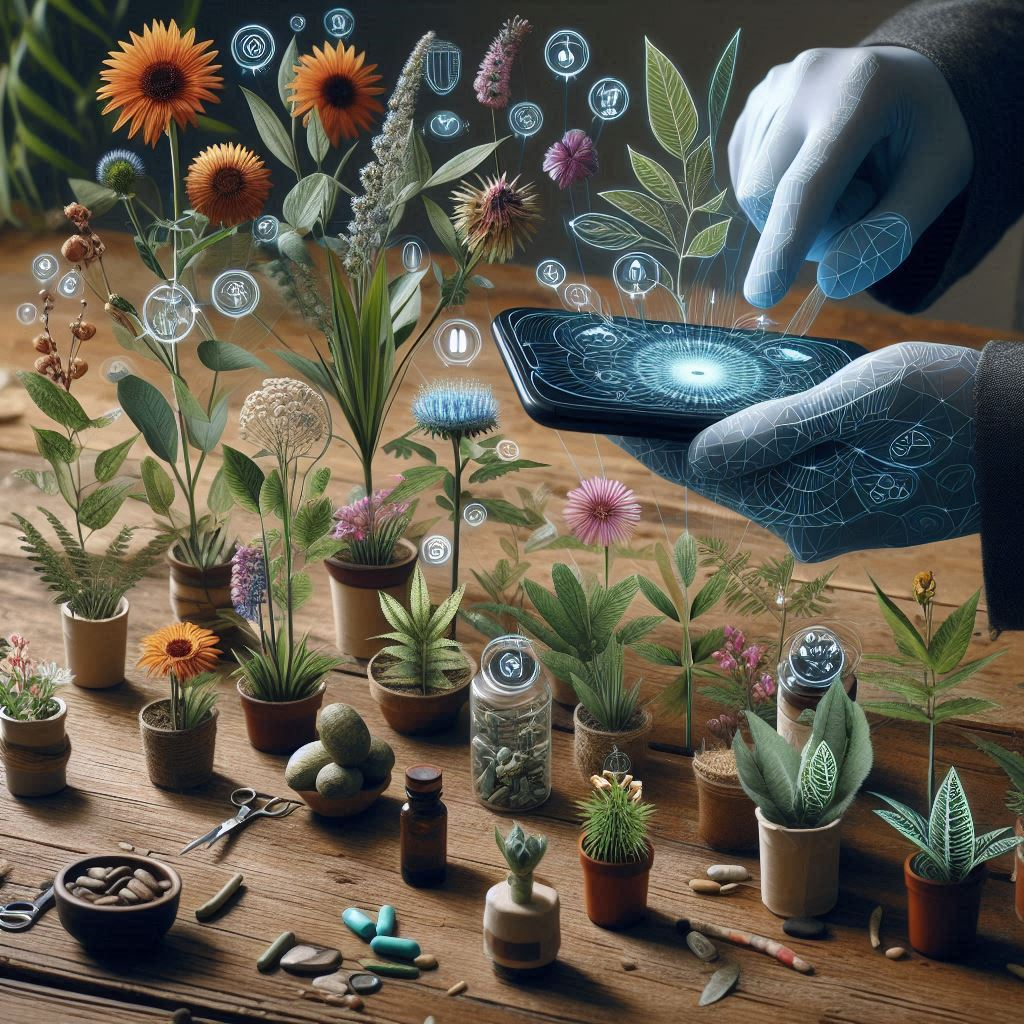
In recent years, the use of emerging technologies has grown in any area, including health. This work consists of the development of an innovative application designed to identify medicinal plants in the Apan region, Hidalgo, taking advantage of cutting-edge technologies such as Deep Learning and Machine Learning powered by libraries such as TensorFlow. This tool ensures highly accurate and real-time results, accessible from any internet-enabled device with a camera. Users can scan plants—whether dried or alive—using their device to obtain detailed information about their medicinal properties, traditional uses, and potential benefits. The application also includes a database of local botanical knowledge, curated in collaboration with experts and indigenous communities.Unfortunately, this ancestral knowledge is at risk of being lost, as younger generations are increasingly unfamiliar with medicinal plants, and the elders who possess this wisdom are not always able to pass it on. By combining advanced technology with traditional wisdom, the app not only facilitates the identification of plants but also promotes the preservation and dissemination of this invaluable heritage. This initiative aims to bridge the gap between modern science and traditional practices, ensuring that future generations can access and benefit from this knowledge before it disappears. Additionally, the app fosters environmental awareness by encouraging users to learn about and protect local biodiversity.
Article Details
References
Goeau, H., Bonnet, P., Joly, A., Molino, J. F., Barthelemy, D., & Boujemaa, N. (2018). Pl@ntNet: A deep learning-based mobile application for plant identification. Biodiversity Informatics, 13(1), 14-28.
Joly, A., Bonnet, P., Goëau, H., Barbe, J., Selmi, S., Champ, J., ... & Boujemaa, N. (2014). PlantNet: A participatory database for plant identification. Proceedings of the 2014 ACM Conference on Multimedia, 517-518. https://doi.org/10.1145/2647868.2655055
Kumar, N., Belhumeur, P. N., Biswas, A., Jacobs, D. W., Kress, W. J., Lopez, I. C., & Soares, J. V. B. (2012). LeafSnap: A computer vision system for automatic plant species identification. Proceedings of the 12th European Conference on Computer Vision (ECCV), 502–516. https://doi.org/10.1007/978-3-642-33709-3_36
Mader, P., Otte, J., Speck, T., & Weigend, M. (2021). Flora Incognita: AI-driven plant identification for citizen science and education. Ecological Informatics, 61, 101198.
Muñoz, I., & Bolt, A. (2021). Diseño y desarrollo de aplicación móvil para la clasificación de flora nativa chilena utilizando redes neuronales convolucionales. https://arxiv.org/abs/2106.06592
Seltzer, C. E., & Long, M. M. (2020). iNaturalist: A Nature App that Connects Citizens to Science. Frontiers in Ecology and the Environment, 18(9), 458-459. https://doi.org/10.1002/fee.2235
Sweeney, P. W., Stagg, C., Ríos, N., & Kriebel, R. (2018). Digitization of the New York Botanical Garden Herbarium. Biodiversity Data Journal, 6, e22822. https://doi.org/10.3897/BDJ.6.e22822
Rzanny, M., Seeland, M., Wäldchen, J., & Mäder, P. (2019). Automated plant species identification: Trends and future directions. PLoS Computational Biology, 15(4), e1007044. https://doi.org/10.1371/journal.pcbi.1007044
Ullah, S., & Khan, S. (2016). A survey of plant identification using image processing techniques. International Journal of Image, Graphics and Signal Processing, 8(10), 25-34. https://doi.org/10.5815/ijigsp.2016.10.04
Ytow, N., & Okada, K. (2012). Online identification tools for biodiversity research. Biodiversity and Conservation, 21(12), 3287-3299. https://doi.org/10.1007/s10531-012-0360-6