
Couples: chemical bond analogy
Article Sidebar
Main Article Content
Abstract
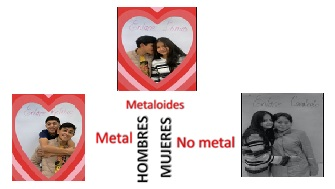
Analogies are among the most used tools in teaching, they are used to explain knowledge that is difficult to understand, and they facilitate the process of learning new concepts. Learning on the basis of something familiar. This work uses the method called "teaching with analogies" to propose an analogy between the subject of chemical bonding and couple relationships. The six operations of the method are analyzed and the teaching activities necessary for the implementation of the analogy in the teaching learning process are determined. The generated analogy relates ionic, covalent, and metallic bonds with man-woman, woman-woman and man-man couples, respectively. In order to explain the stability of the different chemical bonds, a relationship is established between sharing, losing, and gaining electrons with the negotiations that exist within a couple. Analogies facilitate the recall of information and its contextualization, allow the construction of knowledge, as well the easy visualization of abstract theoretical concepts, therefore, they contribute to the student having meaningful learning.
Article Details
References
Clement, J. (1987). Observed Methods for Generating Analogies in Scientific Problem Solving. Cognitive Science, 12, 563-586.
Felipe, A. E., Gallarreta, S. C., & Merino, G. (2006). Aportes para la utilización de analogías en la enseñanza de las ciencias. Ejemplos en biología del desarrollo. Revista Iberoamericana de Educación, 37(6), 1–10. https://doi.org/10.35362/RIE3762678
Glynn, S. M. and Takahashi T. (1998). Learning from Analogy-Enhanced Science Text. Jornal of Research Science Teaching, 35 (10), 1129-1149. https://doi.org/10.1002/(SICI)1098-2736(199812)35:10
<1129::AID-TEA5>3.0.CO;2-2
Glynn, S. (2007). The Teaching-with-Analogies Model: Build Conceptual Bridges with Mental Models. Science and Children, 44 (8), 52-55.
Greiner, R. (1988). Learning by understanding analogies. Artificial Intelligence, 35(1), 81–125. https://doi.org/10.1016/0004-3702(88)90032-X
Harrison, A. G., & Treagust, D. F. (2006). Teaching and Learning with Analogies. Metaphor and Analogy in Science Education, 11–24. https://doi.org/10.1007/1-4020-3830-5_2
Izquierdo, M. (1999). Aportación de un modelo cognitivo de ciencia a la enseñanza de las ciencias. ICE de la Universidad Autónoma de Barcelona.
Orgill M. & George Bodner G. (2004). What research tells us about using analogies to teach chemistry. Chemistry Education Research and Practice, 5(1), 15–32. https://doi.org/10.1039/B3RP90028B
Recio Del Bosque, F. (2012). Química Inorgánica (5a ed.). México: Mc Graw Hill. (Obra original publicada en 1995)
Sivaev, I. B. (2020). Some Analogies in Inorganic Chemistry (in memory of A. A. Pasynskii). Russian Journal of Inorganic Chemistry, 65(12), 1854–1861. https://doi.org/10.1134/S0036023620120165/FIGURES/6
Tim, C. F. (2004). Use of analogies to teach general biology to non-biology majors. Triannual newsletter, 8(1). Centre for Development of Teaching and Learning (C.D.T.).