
Technological tool to a community tourism company in the Mezquital Valley, Hidalgo, Mexico.
Article Sidebar
Main Article Content
Abstract
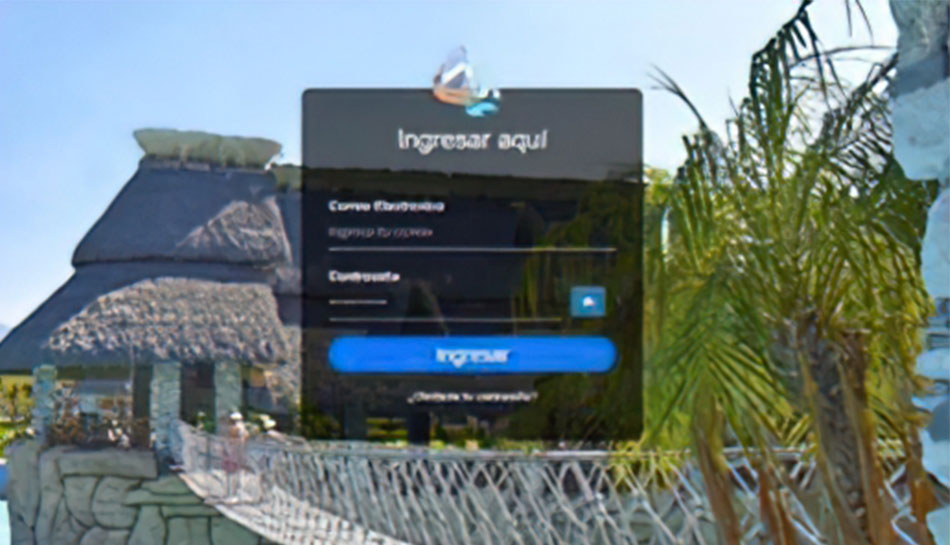
The project is about a technological tool that serves an area of opportunity in a community tourism company located in the Mezquital Valley called Parque Acuático Te-Pathé, in the state of Hidalgo, Mexico. In which, there are two representative figures, they are the partner-investors (around 420) and the administrative (made up of Principal, Secretary, Treasurer, Principal of the Surveillance Council, Secretary of the Surveillance Council, Management systems area and Members); which frequently have conflicts regarding the monitoring of certain activities by both figures; as well as, the control of access passes to the park, to which the shareholders-investors are entitled. For this, a mixed research methodology, with the quantitative approach, descriptive results were obtained that allowed a diagnosis, with qualitative approach customer requirements were obtained. Was also used an agile systems development methodology named Scrum, that allowed the creation of a web system and a mobile application that favors communication and interaction between partner-investors and administrators; in addition, it allows the monitoring of notifications and the equitable distribution of access passes for partner-investors.
Article Details
References
eMatecs. (2021). Tabla de probabilidades de la distribución normal. Disponible de https://ematecs.com/tabla-de-probabilidades-de-la-distribucion-normal/
Ernawati, N. M. Sanders, D. & Dowling, R. (2017). Host–Guest Orientations of Community‐based Tourism Products: A Case Study in Bali, Indonesia. International Journal of Tourism Research, 19, pp. 367-382. doi:10.1002/jtr/2119
Google. (2021). Descubre la familia de productos hechos en google. Disponible de https://about.google/intl/es/products/
Manyara, G., & Jones, E. (2007). Community-based Tourism Enterprises Development in Kenya: An Exploration of Their Potential as Avenues of Poverty Reduction. Journal of Sustainable Tourism, 15, 628-644. doi:10.2167/jost723.0
Microsoft. (2021) Introducing the new Yammer. Disponible de https://support.microsoft.com/es-es/office/-qu%C3%A9-es-yammer-1b0f3b3e-89ee-4b66-aac5-30def12f287c
Onieva, L. J. L. (2018). Scrum como estrategia para el aprendizaje colaborativo a través de proyectos: Propuesta didáctica para su implementación en el aula universitaria, Profesorado, 22, 510-527.
Schott, C. & Nhem, S. (2018). Paths to the market: analysing tourism distribution channels for community-based tourism. Tourism Recreation Research, 1, 1-16. doi:10.1080/02508281.2018.1447837
Todoist. (2021). Organízalo todo con Todoist. Disponible de https://todoist.com/es/home?gspk=c2VtYW50aWNsYWJzNzMxNw&utm_campaign=strategic_partner&utm_content=semanticlabs7317&utm_medium=strategic_partner&utm_source=partnerstack&sid=1-g-Cj0KCQiApL2QBhC8ARIsAGMm-KHZ5OwdQF9WnvCtLesu9qjY3UpOA8HSLs1OyzNfm0jxgzIvGaqwqIQaAmUzEALw_wcB&gclid=Cj0KCQiApL2QBhC8ARIsAGMm-KHZ5OwdQF9WnvCtLesu9qjY3UpOA8HSLs1OyzNfm0jxgzIvGaqwqIQaAmUzEALw_wcB
Trello. (2021). Cómofunciona Trello desde lo básico. Disponible de https://www.tecnocible.com/como-funciona-trello/